No-shows are killing your margins — the bank imprint, explained
Empty tables cost most restaurants 5–10 % of revenue. A configurable bank imprint cuts that to near zero, without scaring off regulars. Here is how to deploy it sanely.
Industry benchmarks put no-show rates between 5 % and 20 % depending on the city and the service. For a 60-cover restaurant, a 10 % no-show rate on a Saturday night burns ≈ €600 of foregone revenue. Every weekend.
That money is not coming back from "reminder emails". The single intervention that works, across thousands of venues we've seen, is the bank imprint — and used right, it doesn't hurt your guest experience.
What a bank imprint actually is
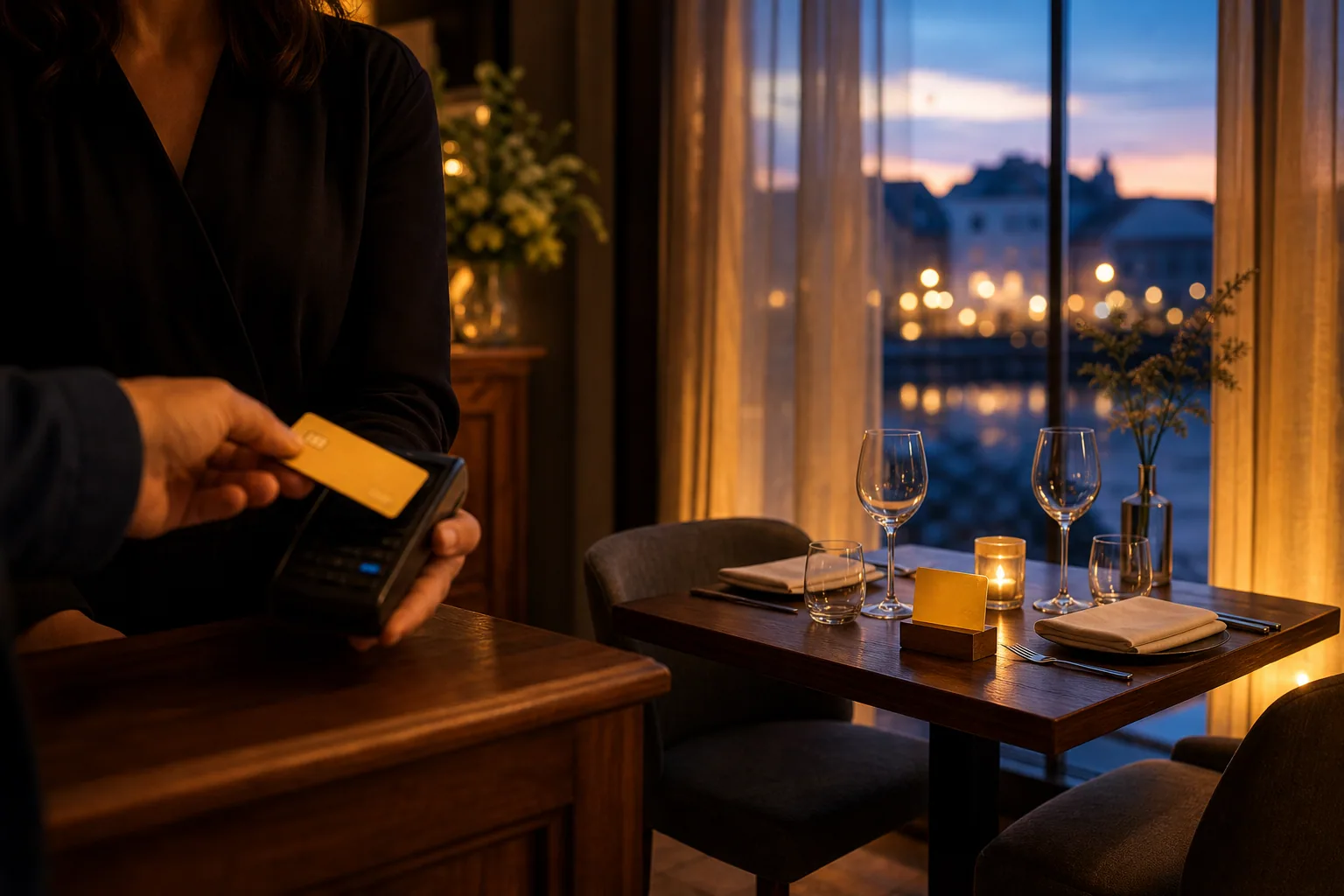
The bank imprint is a pre-authorisation hold on the customer's card at the moment of booking. No money is charged. The hold expires after the service. You only debit the agreed penalty if the customer no-shows.
Two important nuances:
- It's not a deposit. The cash stays with the guest until the worst case happens.
- It's not a punishment. It's an alignment of incentives: showing up costs nothing, not showing up costs something.
Don't apply it to every reservation
The rookie mistake is to require an imprint on every booking. That destroys conversion: Google data shows reservation drop-off rises by 35 % when a card is required upfront.
The smart move is conditional imprint:
- Always: large parties (6+), tasting menus, holidays (NYE, Mother's Day, Valentine's Day).
- Sometimes: Friday and Saturday nights past 8 PM.
- Never: Tuesday lunch with a regular.
Most reservation systems (including ours) let you set those rules from the back-office without coding anything.
The penalty must feel fair
We've benchmarked dozens of policies. What works:
- €10 to €25 per cover. Lower than that, customers laugh at it. Higher, you look greedy.
- Free cancellation up to 24 hours before. Gives flexibility, removes the "I had no choice" excuse.
- Penalty is visible at booking time. No surprises. Customers respect terms they agreed to.
The point is not to make money on no-shows. It's to never have to charge a no-show at all.
What changes after 60 days
Across the venues that deploy this properly, here's what we see in the data:
- No-show rate drops from 8–12 % to 1–2 %.
- Cancellation rate (legitimate, 24h+) stays the same — guests aren't more afraid to book.
- Reservation volume drops by 4–7 % in the first month, then recovers fully. The drop is mostly the no-shows that would have happened anyway.
- Tip income rises, because the served tables actually exist.
The script for explaining it to guests
If a regular asks why you now ask for a card, here is the answer that works:
"We started having a lot of no-shows on Saturday nights. To avoid pre-paying or hiking prices, we ask for a card imprint — no charge, just a guarantee. You won't see anything on your statement unless you don't show up. It really helps us keep the team."
90 % of guests will say "of course". The 10 % who push back are usually the ones you'd rather not see anyway.
Configure your own no-show policy in 5 minutes — or book a 15-min demo and we'll show you the rules our best operators use.
Want this running in your venue?
Book a 15-minute demo — we show you the exact setup top operators use.